Since the start of summer 2026, the Russian army has carried out a targeted series of strikes against Ukrainian publishers, printing houses, and book warehouses. According to the Ukrainian government, 21 publishing sites and book warehouses have been hit so far, destroying between 10 and 13 million books – around a third of the country's annual book production. Direct damage to the industry is estimated at at least 1.19 billion hryvnia.
Numerous well-known houses have been affected: the destruction of the "Konvi" printing house resulted in the loss of around 600,000 books, including 250,000 school textbooks. Publisher BookChef lost approximately 800,000 books in an attack on Kyiv on July 2, while "Knyholav" lost around 250,000 books on the night of July 19, when three Iskander missiles destroyed its warehouse – a loss of 25 million hryvnia. In Kharkiv, the warehouses of publisher RNK-Ranok were destroyed, and the fire at the "Petrivka" book market hit several publishers at once, including "Vikhol," "Ranok," BookChef, "Nash Format," "Laboratoriya," and "RM." The renowned children's book publisher "A-Ba-Ba-Ha-La-Ma-Ha," run by Ivan Malkovych, also lost its central distribution warehouse.
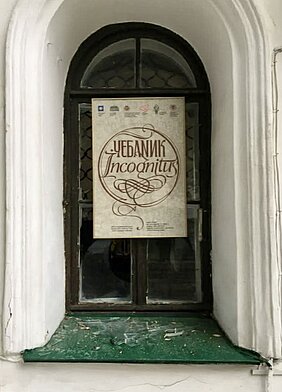
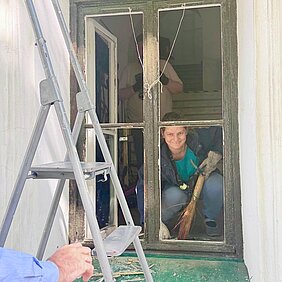
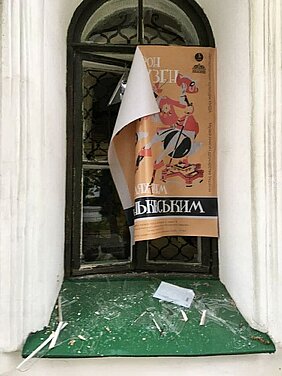
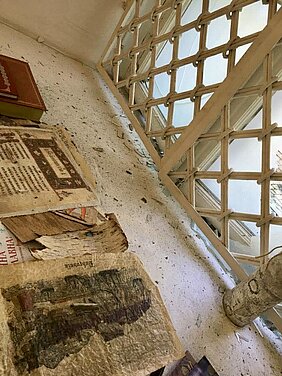
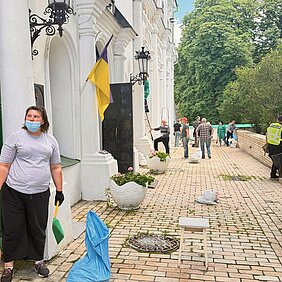
On June 15, 2026, a missile and drone attack on Kyiv also damaged the Museum of Book and Printing of Ukraine. The main impact hit the neighboring Cathedral of the Dormition (a UNESCO World Heritage site); the shockwave shattered nine large windows in the museum, which is housed in a former 1700 monastery. Valuable items such as the Lviv Apostle (1574) and the Ostroh Bible (1581) were undamaged, but the anniversary exhibition had to be taken down.
"For us, every day feels like it could be our last"
This is the museum directed by our 2024 prize winner, Valentyna Bochkovska, works. Asked by us about the situation, she describes how the destruction of publishing infrastructure goes far beyond the material damage: having already targeted food, pharmaceutical, and energy supplies, Russia is now deliberately targeting Ukraine's intellectual potential – its publishers, book warehouses, museums, and libraries. She has personal, long-standing ties to several of the affected publishers, including Olya Popovich of Kalamar, which has supported the museum's festival "The Alphabet Kingdom of Magicians and Angels" for years, and Ivan Malkovych of "A-Ba-Ba-Ha-La-Ma-Ha."
"Right now, it's hard for us to focus on anything other than holding out, surviving, and fighting for the right to a normal life. For us, every day feels like it could be our last," Bochkovska says. Still, this is not meant to be the last word: Ukrainian publishers, authors, and cultural institutions want to keep working – with international support.
How to help right now
Bochkovska names concrete ways people abroad can help: ending cooperation with Russian publishers and literary agencies, helping Ukrainian books translated into German, English, French, and Italian reach European readers, and helping organize presentations by Ukrainian authors, publishers, and exhibitions.
Those who would like to make a financial donation can do so through the fundraising campaign of the Stiftung Buchkultur und Leseförderung of the German Publishers and Booksellers Association (Börsenverein des Deutschen Buchhandels), which specifically supports the reconstruction of the Ukrainian book industry – publishers, bookstores, and authors receive the funds regardless of association membership.
Bank transfers can be sent to: Stiftung Buchkultur und Leseförderung des Börsenvereins des Deutschen Buchhandels, reference "Ukraine," IBAN DE13 5085 1952 0000 1249 17, BIC HELADEF1ERB. Donations via PayPal are also possible through the Börsenverein's donation page.
Urgently needed: power stations for the winter
Valentyna Bochkovska describes particularly vividly what the museum team fears for the coming fall and winter: with power, water, and heating expected to fail in the surrounding residential high-rises, and Russian missiles and drones repeatedly hitting residential buildings, the team is considering living together in the museum during the cold months. For that, they need high-capacity power stations that work independently of the power grid.
The Mainz-based aid organization Oranta Helps has spontaneously offered to help. So the organization doesn't have to cover the cost alone, it's collecting donations toward it – whether €10, €50, or €500: every contribution brings Valentyna Bochkovska's team a step closer to making it safely through the winter. If you'd like to help, donate directly via Oranta Helps' donation page, reference "Bücherrettung in Kiew."
The Internationale Gutenberg-Gesellschaft in Mainz e.V. stands in solidarity with its Ukrainian colleagues.